Xylitol health risks have recently received renewed attention after new research presented at the European Society of Cardiology Congress 2026 linked higher blood levels of xylitol with a greater risk of major cardiovascular events.
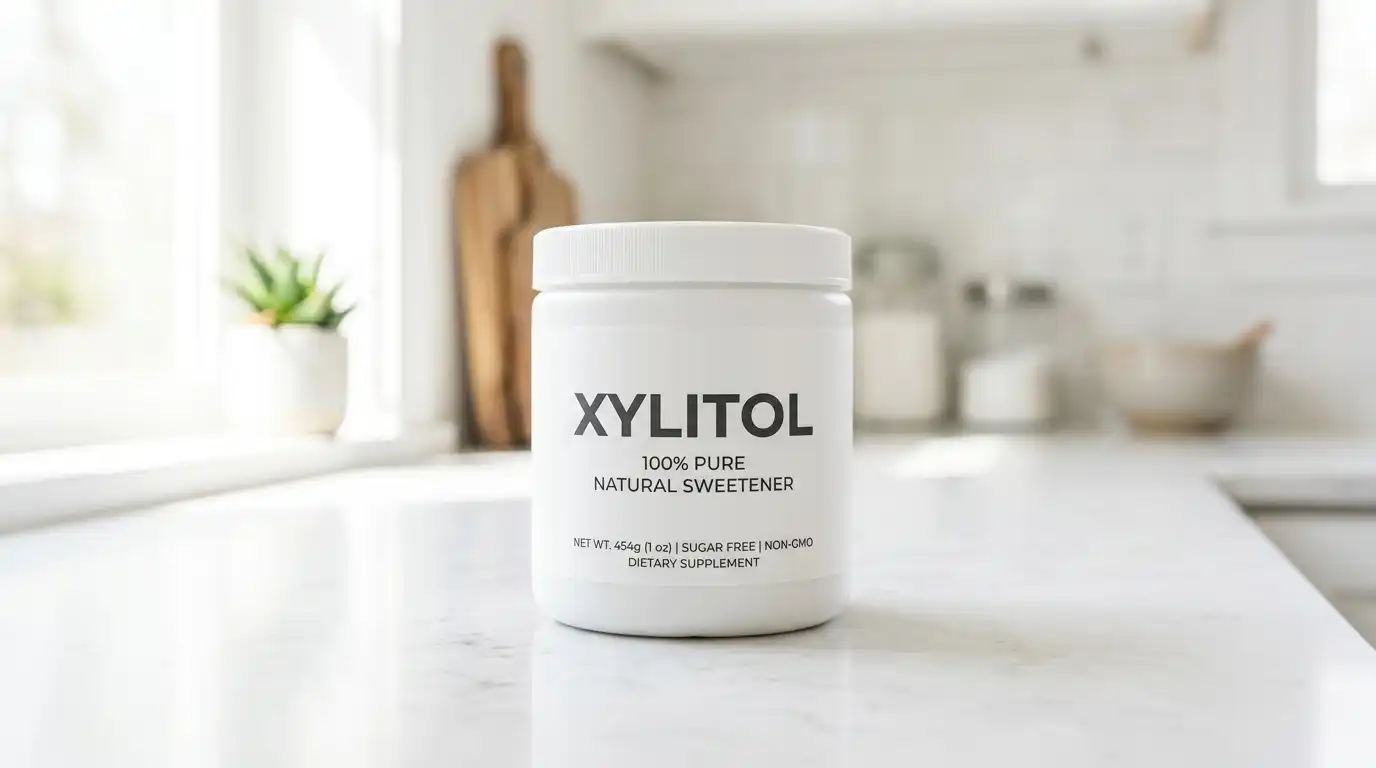
Xylitol has traditionally been viewed as a useful alternative to sugar. It is a sugar alcohol used in sugar-free chewing gum, candies, beverages, baked products and oral-care products. It provides fewer calories than sugar and has less effect on blood glucose. It is also associated with dental-health benefits.
However, researchers are now investigating whether frequent or high exposure to xylitol could have unwanted effects on the cardiovascular system—particularly blood clotting.
So, what are the xylitol health risks, how strong is the evidence, and should people stop using xylitol?


What is xylitol?
Xylitol is a sugar alcohol, also known as a polyol. Despite the name, it is not an alcoholic beverage ingredient. It is a carbohydrate that tastes approximately as sweet as sugar but contains fewer calories.
Small amounts of xylitol occur naturally in certain fruits and vegetables, and the human body can also produce xylitol as part of normal metabolism. Commercially produced xylitol, however, can be present in much larger amounts in some processed foods and oral-care products.
Xylitol is commonly found in:
- Sugar-free chewing gum
- Sugar-free mints and candies
- Some low-sugar foods and beverages
- Toothpaste and oral-care products
- Some pharmaceutical and dietary products
The U.S. FDA permits sugar alcohols including xylitol to be used as sugar substitutes.
Why has xylitol been considered a healthier sweetener?
Xylitol became popular partly because it has several advantages compared with ordinary table sugar. It contains fewer calories than sugar and generally produces a much smaller rise in blood glucose. This makes it attractive in products designed for people who want to reduce their intake of added sugar.
Xylitol is also widely used in dental products because sugar alcohols do not promote tooth decay in the same way that fermentable sugars do. Studies have investigated xylitol-containing chewing gum and other products for their effects on dental plaque and caries.
However, a food ingredient can have potential benefits in one area while still requiring investigation for other health effects. That is where the recent xylitol health risks research becomes important.
Does xylitol cause heart attacks and strokes?
This is one of the most important points when discussing the latest xylitol health risks. The 2026 study was observational. Researchers measured blood xylitol levels and examined what happened to participants over time. Such studies can identify associations but cannot establish that xylitol itself caused the cardiovascular events.
There is another important complication: blood xylitol does not necessarily equal dietary xylitol intake. The human body naturally produces xylitol, so a person’s blood concentration can potentially reflect both internal metabolism and exposure from foods or other products. Therefore, it is not appropriate to interpret the study simply as “people who ate the most xylitol had a 57% higher risk.”
The researchers themselves emphasized the need for further studies to establish the cardiovascular safety of xylitol.
How could xylitol affect blood clotting?
One of the most interesting aspects of the research is the potential effect on platelets. Platelets help maintain normal blood clotting. However, excessive platelet activation can contribute to thrombosis—the formation of a blood clot inside a blood vessel.
The 2024 research found that xylitol enhanced platelet reactivity and thrombosis potential in experimental models. Researchers also observed changes in platelet responsiveness after xylitol exposure in a small human experiment.
This creates a possible biological pathway:
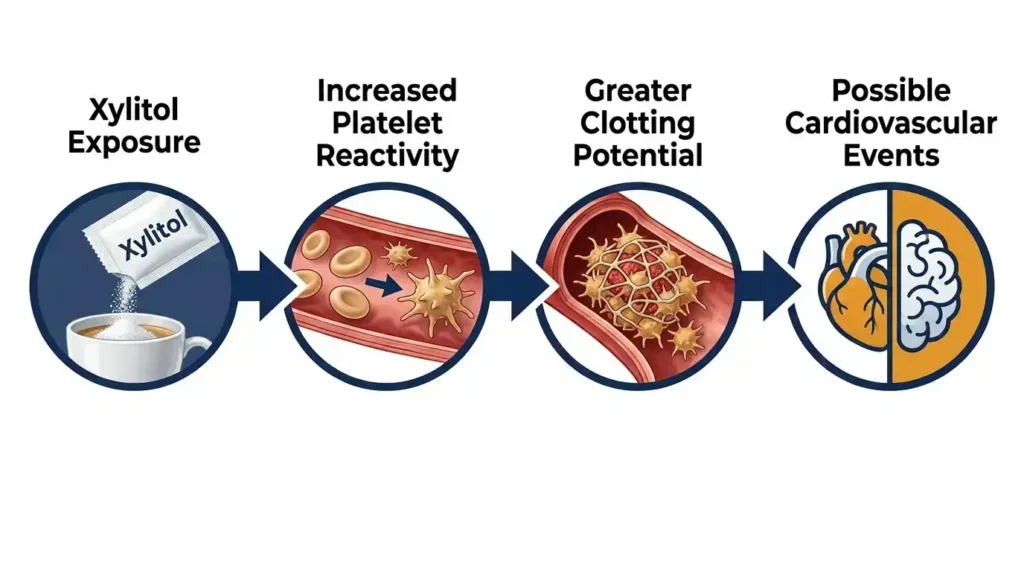
However, this is a proposed mechanism, not proof that ordinary consumption of xylitol causes thrombosis in humans.
What health problems are being investigated?
The current research has mainly raised concerns about cardiovascular and clotting-related outcomes.
Heart attack– A heart attack occurs when blood flow to part of the heart muscle becomes blocked, usually because of a blood clot forming over a ruptured atherosclerotic plaque. Xylitol research suggests increased platelet reactivity, and researchers are investigating whether this could contribute to cardiovascular events such as myocardial infarction.
Ischemic stroke– An ischemic stroke occurs when a blood vessel supplying the brain becomes blocked. Because thrombosis can cause ischemic stroke, the potential effect of xylitol on platelet activity is one reason stroke has been included among the outcomes investigated in the research.
Major cardiovascular events– The recent 2026 research used the broader term major adverse cardiovascular events (MACE), which included cardiovascular death, heart attack and stroke. Importantly, these are associations observed in research—not established complications proven to be caused by xylitol.
What about digestive problems of xylitol?
The cardiovascular research has attracted the most recent attention, but gastrointestinal symptoms are a much more established issue with high intake of sugar alcohols. Because xylitol is incompletely absorbed in the intestine, consuming large amounts can cause bloating, gas, abdominal discomfort, loose stools, diarrhea. The amount required to cause symptoms varies considerably between individuals. Research on sugar alcohols has documented gastrointestinal disturbances with excessive consumption. So even before the recent cardiovascular discussion, consuming large quantities of xylitol was not necessarily harmless from a digestive standpoint.
Is xylitol still useful for dental health?
Xylitol’s potential dental benefits should not simply be forgotten because of the new cardiovascular research. Sugar alcohols such as xylitol do not behave like ordinary fermentable sugars in the mouth, and xylitol-containing chewing gum has been studied for effects on dental plaque and caries. However, the evidence surrounding xylitol and dental disease is not the same as evidence about cardiovascular safety. In other words, a potential dental benefit does not automatically establish that long-term, high dose consumption is cardiovascularly safe.
Should you stop consuming xylitol?
At present, there is not enough evidence to recommend that everyone completely eliminate xylitol. The recent findings are important, but they remain an evolving area of research. The 2026 findings are observational, and the ESC has specifically called for further studies into the safety of xylitol and other artificial sweeteners. A reasonable approach for most people is to avoid excessive reliance on highly processed, sweetened foods and to focus on an overall heart-healthy dietary pattern. If you have established cardiovascular disease or are at particularly high cardiovascular risk, discuss your regular use of large amounts of xylitol-containing products with your doctor rather than making major dietary changes based on a single study.
Key Takeaways
The recent research has changed the conversation around xylitol. For years, xylitol has been promoted as a useful alternative to sugar because it contains fewer calories, has less impact on blood glucose and can be useful in oral-care products. However, studies published in 2024 and new research presented in 2026 have raised concerns about a possible relationship between higher xylitol exposure, platelet activation and cardiovascular events.
The latest study involving 17,710 people found that those with the highest blood xylitol levels had a higher observed risk of major cardiovascular events than those with the lowest levels. But this was an observational study, so it cannot establish that xylitol caused those events.
For now, the most scientifically responsible message is not “xylitol causes heart attacks.” It is that xylitol’s long-term cardiovascular safety is an important unanswered question that deserves further research. For consumers, moderation and an overall minimally processed, heart-healthy diet remain sensible approaches while scientists continue investigating the issue.

Sources
- European Society of Cardiology (ESC) – 2026. Xylitol may increase the risk of cardiovascular events. https://www.escardio.org/news/press/press-releases/xylitol-may-increase-the-risk-of-cardiovascular-events/
- European Heart Journal / PubMed – 2024. Witkowski M, et al. Xylitol is prothrombotic and associated with cardiovascular risk. https://pubmed.ncbi.nlm.nih.gov/38842092/
- National Institutes of Health (NIH) – 2024. Xylitol may affect cardiovascular health. https://www.nih.gov/news-events/nih-research-matters/xylitol-may-affect-cardiovascular-health
- National Heart, Lung, and Blood Institute (NHLBI) – 2024. Common sweetener linked to potential cardiovascular risks. https://www.nhlbi.nih.gov/news/2024/common-sweetener-linked-potential-cardiovascular-risks
- Cleveland Clinic – 2024. Sugar substitute xylitol associated with increased risk of heart attack and stroke. https://newsroom.clevelandclinic.org/2024/06/06/cleveland-clinic-led-study-links-sugar-substitute-to-increased-risk-of-heart-attack-and-stroke
- Full-text scientific paper – PMC/NIH. Xylitol is prothrombotic and associated with cardiovascular risk. https://pmc.ncbi.nlm.nih.gov/articles/PMC11492277/
- European Heart Journal – 2025 commentary/research. Xylitol exposure and cardiovascular risk. https://academic.oup.com/eurheartj/article/46/3/328/7905371
Frequently Asked Questions
1. Is xylitol dangerous?
Xylitol is an approved and widely used sugar alcohol, but recent research has raised questions about its long-term cardiovascular safety, particularly at higher exposure levels. The evidence does not currently establish that normal consumption causes heart disease.
2. Can xylitol cause blood clots?
Experimental research suggests that xylitol can increase platelet reactivity and thrombosis potential. However, it has not been definitively established that ordinary dietary consumption causes harmful blood clots in people.
3. Does xylitol increase the risk of heart attack?
Higher blood xylitol levels have been associated with major cardiovascular events, including heart attack. However, the observational evidence does not prove causation.
4. Does xylitol cause stroke?
Stroke was among the cardiovascular outcomes included in the recent research. However, there is currently no definitive evidence proving that consuming xylitol causes stroke.
5. Is xylitol better than sugar?
Xylitol has advantages over sugar, including fewer calories and a smaller effect on blood glucose, and it is used in dental products. However, the emerging cardiovascular research means its long-term safety deserves further investigation.