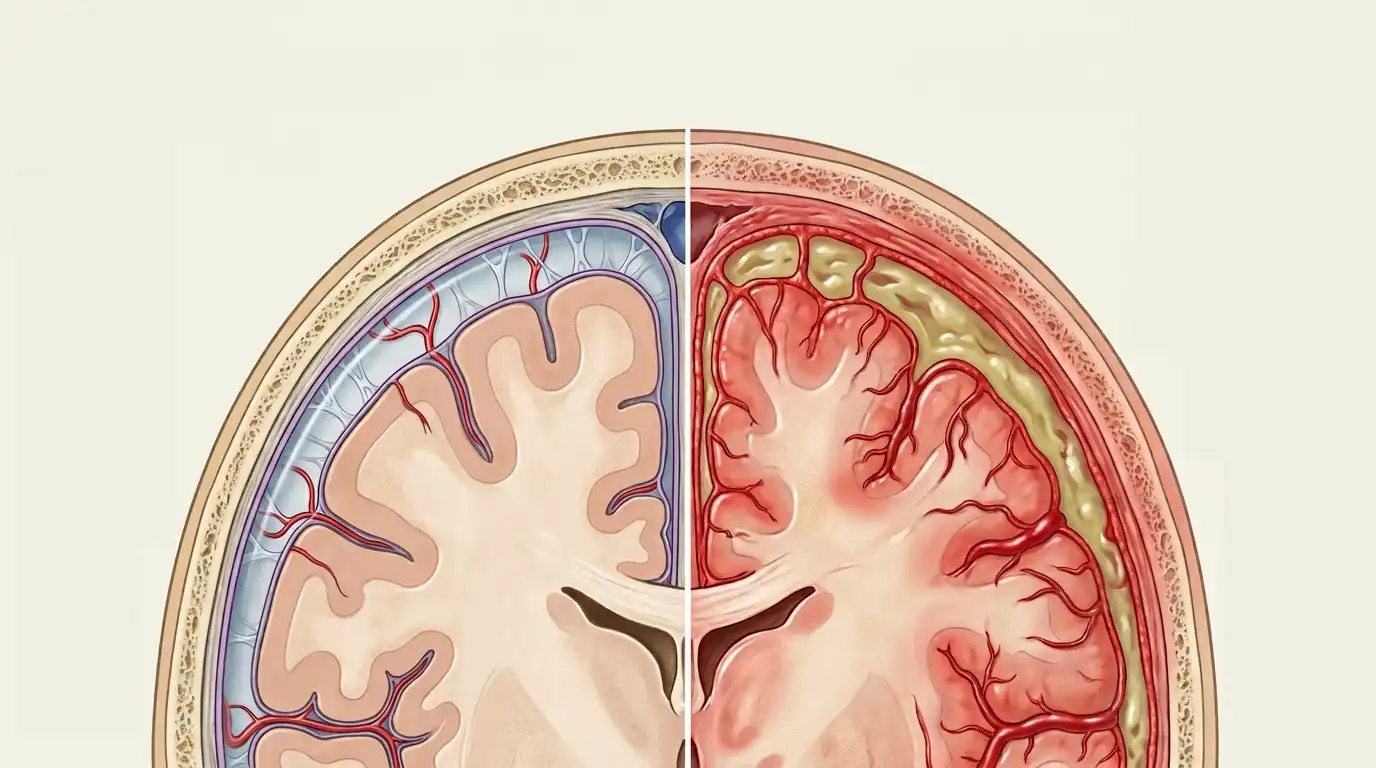
Meningitis is inflammation of the protective membranes surrounding the brain and spinal cord. It can be caused by viruses, bacteria, fungi and other organisms. While some forms of meningitis may improve with supportive care, bacterial meningitis can become life-threatening very quickly and requires urgent medical treatment.
Knowing the symptoms of meningitis is important because the illness can initially resemble flu, a stomach infection or another common illness. Symptoms can also appear in different orders, and not everyone develops every typical symptom.
The most important message is simple: if meningitis is suspected, do not wait for all the symptoms to appear. Seek urgent medical help.



What Is Meningitis?
Meningitis occurs when the meninges—the protective membranes around the brain and spinal cord—become inflamed.
There are several types of meningitis. Viral meningitis is common and is often less severe, while bacterial meningitis is less common but can cause severe illness, permanent disability or death. Other causes include fungal infections, tuberculosis and, more rarely, parasites or non-infectious conditions.
According to the World Health Organization, meningitis remains an important global health problem. Bacterial meningitis is particularly serious: approximately 1 in 6 people affected may die, while around 1 in 5 survivors may develop severe complications.
Meningitis Symptoms Can Develop Quickly
One of the most important things to understand about meningitis symptoms is that they do not necessarily appear in a predictable order.
A person may initially have fever and headache and then deteriorate rapidly. Another person may develop vomiting, confusion or a rash. Some people may not have a rash at all.
This means that waiting for the “classic” combination of fever, headache, stiff neck and rash can be dangerous.
Common Meningitis Symptoms
Common meningitis symptoms can include:
- Fever
- Severe or worsening headache
- Stiff or painful neck
- Nausea and vomiting
- Sensitivity to bright light
- Confusion or changes in mental alertness
- Unusual sleepiness or difficulty waking
- Seizures
- Muscle or joint pain
- Cold hands and feet
- Pale, mottled or blotchy skin
- Rash (particularly in meningococcal disease)
Not everyone with meningitis will experience all of these symptoms.
Fever and Meningitis
Fever is one of the common symptoms of meningitis, particularly when meningitis is caused by an infection. However, the absence of an obvious fever does not completely exclude serious disease. Fever can be less noticeable in some older adults, and medicines used to reduce fever can also make it harder to recognize.
A person who is becoming increasingly unwell, confused, unusually sleepy or difficult to wake should receive urgent medical assessment even if their temperature is not obviously high.
Severe Headache and Meningitis
A severe or rapidly worsening headache is another important meningitis symptom.
The headache may be accompanied by fever, neck stiffness, vomiting or sensitivity to light. A particularly severe or unusual headache should not automatically be attributed to migraine, dehydration, lack of sleep or a viral infection when other warning signs are present.
A severe headache combined with fever, neck stiffness or altered mental status requires urgent medical assessment.
Neck Stiffness and Meningitis
Neck stiffness is one of the better-known meningitis symptoms.
A person may find it painful or difficult to move the neck normally. However, neck stiffness is not present in every case, and it may be difficult to recognize in babies, young children, older adults or people who have communication difficulties.
Therefore, the absence of neck stiffness should not be used on its own to rule out meningitis.
Light Sensitivity in Meningitis
Some people with meningitis develop photophobia, meaning that bright light becomes uncomfortable or painful. Sensitivity to light is more concerning when it occurs together with symptoms such as severe headache, fever, vomiting or neck stiffness. Again, however, not having photophobia does not rule out meningitis.
Vomiting, Muscle Pain and Other Symptoms
Meningitis can also cause symptoms that may initially appear unrelated to the brain or spinal cord. Vomiting, muscle pain, joint pain, back pain and general weakness can occur. Some people may also develop diarrhea.
These symptoms can make early meningitis difficult to distinguish from common infections. The overall pattern of illness and how quickly the person deteriorates are important.
The Meningitis Rash
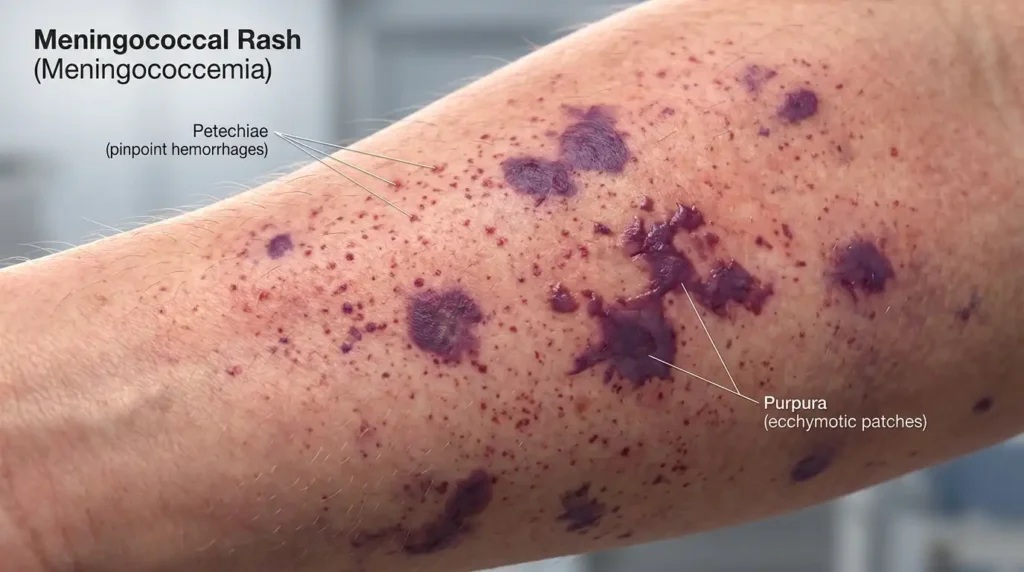
A rash can be an important warning sign, particularly in meningococcal disease. A meningococcal rash may begin as small red or purple spots and can progress to larger areas of discoloration. A concerning rash may not fade when firm pressure is applied, although the absence of a non-blanching rash does not rule out meningitis.
The rash can be harder to see on brown or black skin. When checking for skin changes, it can be useful to examine areas such as the palms, soles, inside the eyelids and other lighter areas of skin.
Do Not Wait for a Rash. Not having a rash does not mean that someone does not have meningitis. A rash may be absent, particularly during the early stages. Some people with meningitis never develop one. Therefore, do not wait for a rash before seeking medical attention if someone has other concerning symptoms.
Meningitis Symptoms in Babies and Young Children
The symptoms of meningitis can be different in babies and young children. A baby may not be able to tell you that they have a headache or stiff neck. Instead, look for changes in behavior or feeding. Possible meningitis symptoms in babies and young children include:
- Fever or an unusually low temperature
- Refusing feeds or feeding poorly
- Irritability
- An unusual or high-pitched cry
- Being unusually sleepy or difficult to wake
- Being floppy, stiff or less responsive than usual
- Vomiting
- Seizures
- A bulging soft spot on the baby’s head
- Rapid breathing or other signs of severe illness
- A non-blanching rash
Parents and caregivers should take significant changes in a baby’s behavior seriously, particularly when several symptoms occur together.
Meningitis Symptoms in Older Adults
Meningitis may also be harder to recognize in older adults. Fever may be less obvious, and symptoms such as confusion or changes in alertness may be mistaken for other conditions.
A sudden change in mental state, unusual sleepiness, severe headache or other acute deterioration should receive prompt medical assessment.
When to Suspect an Emergency?
Suspected meningitis should be treated as a medical emergency, particularly when bacterial meningitis or meningococcal disease is possible. Seek emergency medical care immediately if someone has symptoms such as:
- Severe or rapidly worsening headache
- Fever with a stiff neck
- Confusion or a significant change in mental alertness
- Difficulty waking or extreme sleepiness
- A seizure
- A non-blanching rash
- Severe vomiting together with other concerning symptoms
- Breathing difficulties or very rapid breathing
- Cold hands and feet with severe illness
- Pale, mottled or blotchy skin
- Rapid deterioration or a person who looks seriously ill
Most importantly, do not wait for all the symptoms of meningitis to develop. The combination of fever, headache, neck stiffness and altered consciousness is considered a major red-flag combination for bacterial meningitis. However, bacterial meningitis can still be suspected when some of these symptoms are absent.
Why Early Treatment Matters
Bacterial meningitis can progress rapidly and can lead to serious complications including sepsis, seizures, hearing loss, neurological problems, disability and death.
Current clinical guidance emphasizes urgent hospital assessment when bacterial meningitis or meningococcal disease is suspected. Treatment may include intravenous antibiotics and supportive treatment, depending on the suspected cause and the patient’s condition.
The exact treatment depends on the type of meningitis and the organism responsible. This is why recognizing meningitis symptoms early can be extremely important.
Can Meningitis Be Prevented?
Some forms of meningitis can be prevented through vaccination.
Vaccines are available against several organisms that can cause serious meningitis, including meningococcal bacteria, pneumococcal bacteria and Haemophilus influenzae type b. Vaccination schedules vary according to age, country, medical conditions and individual risk.
Good infection-control practices can also reduce transmission of some organisms. Depending on the cause, meningitis-associated infections may spread through respiratory droplets or close contact with respiratory and throat secretions.
People who have been identified as close contacts of someone with certain types of meningococcal disease may require preventive antibiotics or other public-health measures.
Recent Developments in Meningitis Awareness
Meningitis continues to receive international public-health attention.
In 2026, the World Health Organization published updated practical materials supporting the implementation of its meningitis diagnosis, treatment and care guidelines. These resources emphasize rapid recognition, appropriate investigation, treatment and management of complications.
There were also reports in the United Kingdom in March 2026 concerning an outbreak of invasive meningococcal disease involving MenB. Public-health and hospital information surrounding the outbreak emphasized that symptoms can occur in different orders, may not all be present, and that people should not wait for a rash before seeking medical help.
These developments reinforce an important point: early recognition of meningitis symptoms and rapid medical assessment remain essential.
Key Takeaway
Meningitis can begin with symptoms that resemble other common illnesses, but it can become serious very quickly. Important meningitis symptoms include fever, severe headache, neck stiffness, vomiting, sensitivity to light, confusion, unusual sleepiness, seizures and sometimes a non-blanching rash.
However, meningitis does not always follow a predictable pattern. A person may not have every symptom, and a rash may be absent. If you suspect meningitis, seek urgent medical attention rather than waiting for more symptoms to appear.
Sources
- World Health Organization (WHO) — Meningitis. https://www.who.int/news-room/fact-sheets/detail/meningitis
- World Health Organization — Guidelines on Meningitis Diagnosis, Treatment and Care. https://www.who.int/publications/i/item/9789240108042
- CDC — Clinical Guidance for Meningococcal Disease. https://www.cdc.gov/meningococcal/hcp/clinical-guidance/index.html
- NHS — Meningitis. https://www.nhs.uk/conditions/Meningitis/
- NICE — Meningitis (bacterial) and meningococcal disease: recognition, diagnosis and management (NG240). https://www.nice.org.uk/guidance/ng240